
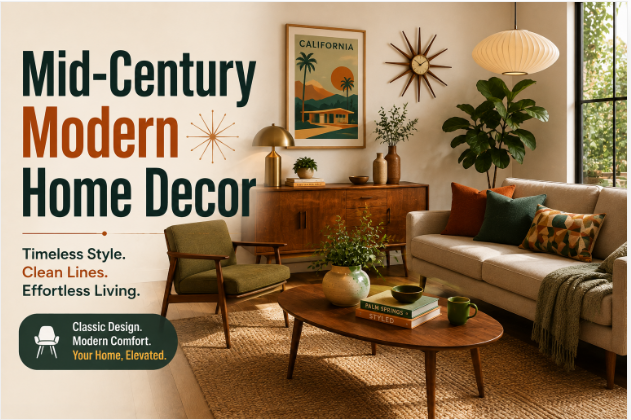
Mid-century modern home decor combines clean-lined furniture, natural materials, organic shapes, functional layouts, and carefully controlled color. In this guide, you’ll learn how to use those principles across your living room, bedroom, dining room, kitchen, bathroom, home office, and entryway—plus how to choose pieces, work with different budgets, avoid common mistakes, and mix mid-century elements with contemporary decor.
What Is Mid-Century Modern Home Decor?
Mid-century modern home decor is an interior design approach associated with the mid-20th century that emphasizes clean lines, functional furniture, natural materials, organic forms, tapered legs, and restrained ornamentation. Rather than filling a room with decoration, the style lets useful furniture, materials, light, and carefully selected accents shape the space.
The style can work throughout a home, from living rooms and bedrooms to dining rooms, kitchens, bathrooms, home offices, and entryways. Modern interpretations can also combine mid-century furniture with contemporary artwork, textiles, lighting, and pieces from other design eras. ELLE DECOR describes the aesthetic through clean lines, organic forms, a less-is-more approach, and high functionality.
Also Read Hygge Home Decor
Why Mid-Century Modern Home Decor Is So Popular
This design style remains useful because its emphasis on function translates easily to contemporary homes. A low-profile sofa, wooden cabinet, sculptural lamp, or streamlined dining table can provide character without requiring a room full of themed decoration.
Another advantage of this style is its flexibility. Current interiors shown by elle decor mix mid-century forms with contemporary artwork, jewel tones, warm ivory, dark woods, vintage pieces, and other design periods rather than treating the aesthetic as a fixed historical formula.
Its adaptability makes it practical for both full renovations and smaller updates. You can introduce the look through one furniture piece, a rug, lighting, artwork, or accessories instead of replacing an entire room.
7 Best Mid-Century Modern Home Decor Ideas-Main Gallery
Living Room
Low-Profile Sofa With Warm Wood
A low-profile sofa immediately establishes the Mid-Century Modern Home Decor horizontal, relaxed character associated with mid-century interiors. Pair it with a wooden coffee table and one contrasting chair rather than buying a complete matching set.
Sculptural Lounge Chair
A curved or sculptural lounge chair can provide chair can provide the organic shape that balances straight-lined furniture. Leave enough space around it so its silhouette remains visible.
Bedroom
Walnut-Inspired Bed and Nightstands
Use warm wood as the visual foundation of the bedroom. A streamlined bed and compact nightstands can carry the style while simple bedding keeps the room calm.
Dining Room
Tapered-Leg Dining Set
Choose Mid-Century Modern Home Decor wooden dining table with slender or tapered legs and chairs with a recognizable but comfortable silhouette. Add one pendant light above the table instead of filling the space with small accessories.
Kitchen
Simple Wood-and-Color Kitchen
For a kitchen, use simple cabinet fronts, restrained hardware, warm wood, and one controlled accent color. Open shelving, slim stools, and a clean island can reinforce the Mid-Century Modern Home Decor look without making the room feel overly retro.
Bathroom and Entryway
Organic Mirror and Simple Vanity
In a bathroom, introduce the Mid-Century Modern Home Decor style through a simple vanity, warm wood, geometric tile, an organic-shaped mirror, and restrained hardware. In an entryway, repeat the same language with a narrow console and artwork.
Lighting, Color, and Accessories
Sculptural Lighting With Controlled Color
Use lighting as both a functional source and a visual shape. Add one or two accent colors through artwork, a rug, chair, cushions, or accessories instead of spreading bright colors across every surface.
How to Choose the Right Mid-Century Modern Home Decor for Your Room Type
Living Room
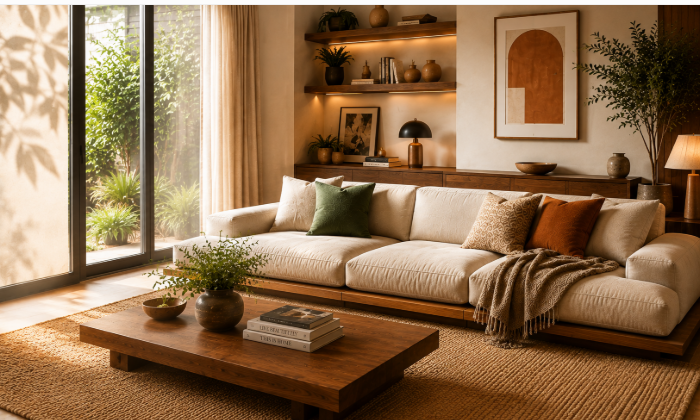
Start with seating because it determines the Mid-Century Modern Home Decor scale and circulation. Choose a sofa that leaves comfortable walking space, then add one contrasting chair, a coffee table, and a rug that visually connects the seating area. Low furniture works particularly well with a taller floor lamp, plant, or vertical artwork to prevent the composition from feeling flat.
Bedroom
Prioritize comfort before decoration. A streamlined wooden bed, practical bedside tables, soft textiles, and layered lighting can establish the style without making the bedroom feel staged. Keep the number of accent pieces low and let natural wood, bedding texture, and one piece of artwork provide most of the visual interest.
Dining Room
Choose the dining table according to the room’s available clearance first, then select chairs that are comfortable for extended meals. A pendant light can define the dining zone in an open layout. If the table is visually simple, use the chairs or artwork to introduce a stronger mid-century shape.
Kitchen
Look for clean cabinet fronts, simple pulls, warm wood, and a restrained palette. Much of the room’s character can come from stools, lighting, backsplash geometry, or an accent color rather than from making every cabinet visibly retro. In an open-plan home, repeat one wood tone or color between the kitchen and adjacent living area.
Home Office
Function should drive your furniture selection. Choose a desk with enough usable surface, a supportive chair, task lighting, and storage that keeps everyday clutter controlled. One vintage-inspired lamp or wooden cabinet can provide enough mid-century identity without compromising productivity.
Best Mid-Century Modern Home Decor by Decor Element
Furniture
Furniture is the Mid-Century Modern Home Decor strongest visual signal, so focus on proportions and silhouettes. Look for tapered or slender legs, low profiles, clean edges, curved details, and useful storage. You do not need an original vintage piece; a well-made contemporary piece with the right characteristics can support the overall design.
Color Palette
Begin with a neutral foundation and warm wood, then introduce one or two accent colors. Deep green, mustard, burnt orange, blue, yellow, and jewel tones can work when repeated deliberately. ELLE DECOR demonstrates that Mid-Century Modern Home Decor interiors can move beyond traditional earth tones while keeping the underlying forms clean.
Lighting
Use layers rather than relying on one ceiling fixture. A pendant can define a dining area, a floor lamp can add height beside low furniture, and a table lamp can create a focused pool of light. Sculptural lighting is especially useful because it functions as decor even when switched off.
Wall Decor
Choose artwork that complements rather than competes with the furniture. Abstract forms, geometric compositions, botanical references, mirrors, and photography can all work. If the room already contains strong furniture shapes, use fewer but larger wall pieces rather than filling every available section.
Textiles and Rugs for Century Modern Home Decor
Rugs help define zones and soften the harder lines of wooden furniture. Geometric patterns can reinforce the era, while wool, cotton, and other tactile fabrics prevent the room from feeling visually cold. Use the rug size to connect Mid-Century Modern Home Decor major furniture pieces instead of choosing a small rug that floats in the center.
Accessories
Accessories should add personality without creating clutter. Plants, ceramics, books, sculptural objects, and small vintage finds can work well when they support the Mid-Century Modern Home Decor colors and materials. Leave some surfaces clear so the strongest furniture pieces remain visible.
Best Mid-Century Modern Home Decor by Space and Lifestyle
Small-Space Homes
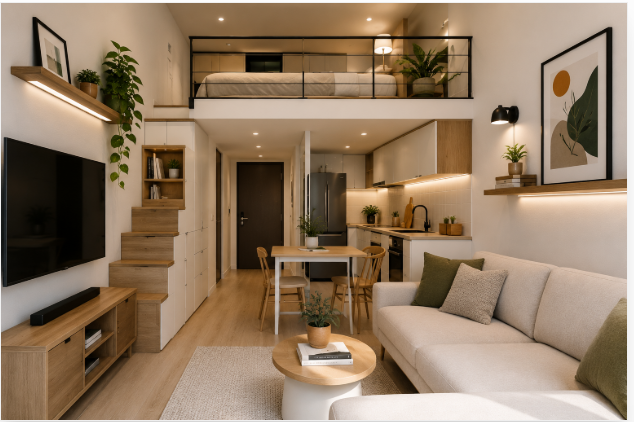
Choose furniture with a lighter visual footprint and prioritize pieces that perform more than one function. A compact sideboard can provide storage and display space, while a wall-mounted or narrow piece can preserve circulation. Mirrors and vertical lighting can help small rooms feel more open.
Open-Plan Homes
Use rugs, lighting, furniture orientation, and repeated materials to establish zones without adding unnecessary partitions. A consistent palette can connect living, dining, and kitchen areas, while different furniture arrangements define their individual purposes. Mid-Century Modern Home Decor also recommends defined zones and consistent materials for cohesive open-concept spaces.
Rental Homes
Focus on reversible changes. Use lamps, rugs, artwork, movable furniture, cushions, plants, and removable decorative elements rather than permanent alterations. A single Mid-Century Modern Home Decor inspired cabinet or chair can change the character of a rental without requiring structural work.
Budget-Conscious Homes
Spend more carefully on pieces you use every day, such as a sofa, dining chair, or desk. Save on accessories, artwork, and easily replaceable textiles. Secondhand furniture can be particularly useful when you know which silhouettes and materials you are looking for.
Full-Home Renovations
Create a consistent design language before purchasing individual rooms. Decide on your main wood tone, neutral base, accent colors, lighting approach, and preferred furniture shapes. The Mid-Century Modern Home Decor allow each room to interpret those decisions differently rather than making every room identical.
Best Mid-Century Modern Home Decor by Audience
Beginners
Start with one room and three recognizable elements warm wood, clean-lined furniture, and sculptural lighting. Avoid buying everything at once. Once those foundations work, add artwork, textiles, plants, and accessories gradually.
Budget-Conscious Decorators
Begin with the pieces that will remain useful for several years. A secondhand wooden cabinet, well-proportioned chair or quality lamp may contribute more than a large collection of inexpensive themed accessories. Shop according to dimensions and construction rather than labels alone.
Experienced Decorators
Use Mid-Century Modern Home Decor style as a framework rather than a rulebook. Experienced decorators can combine mid-century pieces with contemporary art, vintage furniture, Scandinavian textiles, or contrasting materials while maintaining visual connections through repeated colors, wood tones, curves, and proportions.
How to Ask an Expert About Mid-Century Modern Home Decor
Key Phrases to Use
If you consult an interior designer, be specific about Mid-Century Modern Home Decor result you want. Useful phrases include:
“I want a mid-century modern look without making my home feel dated.”
“Which furniture pieces should I prioritize for a mid-century modern room?”
“How can I mix modern pieces with authentic mid-century elements?”
You can also describe your room dimensions; existing furniture, budget, natural-light conditions, and which pieces you want to keep. That gives expert enough information to recommend proportions and materials instead of simply suggesting a style.
Understanding Furniture Measurements and Room Sizing
There is no single mid-century-specific sizing system. The Mid-Century Modern Home Decor practical measurements are room dimensions, furniture width and depth, rug dimensions, lighting size, and the clearances required for comfortable movement.
Measure before shopping. Mark the footprint of large furniture on the floor with painter’s tape, and then check walking routes and door swings. In an open-plan room, also consider the distance between seating, coffee tables, dining chairs, and kitchen circulation.
Common Mistakes to Mention
Tell an expert if you are struggling with scale, mixing eras, choosing between wood tones, or deciding how much color to introduce. Mention whether your furniture is vintage, reproduction, or contemporary because its construction and proportions can change the recommendations.
If you want to preserve an original architectural feature, explain that before discussing furniture placement. A good plan should respond to the Mid-Century Modern Home Decor actual room rather than forcing a generic mid-century template onto it.
Mid-Century Modern Home Decor Video Guide
A visual tutorial can make the style easier to understand because furniture silhouettes, proportions, materials, and room layouts are easier to recognize when shown together. This tutorial from Mid-Century Modern Home Decor with Atefeh covers defining characteristics, furniture, design principles, and ways to implement mid-century modern ideas in a home.
Use the video as visual support, then return to the room-by-room guidance above when making your own furniture and decor decisions.
Common Mid-Century Modern Home Decor Mistakes to Avoid
Buying a complete matching set. A room filled with identical furniture can feel like a showroom. Mix related pieces and let one or two designs provide the strongest Mid-Century Modern Home Decor references.
Making every item look retro. Mid-Century Modern Home Decor goal is not to recreate an old photograph. Contemporary artwork, modern lighting, and current textiles can make the room feel relevant.
Ignoring scale. A beautiful sofa or cabinet can still be wrong for a room if its dimensions restrict movement.
Keeping every piece low. Low-profile furniture is useful, but an entire room at one visual height can feel flat. Add floor lamps, tall plants, vertical artwork, or appropriately scaled curtains.
Using too many accent colors. Mid-Century Modern Home Decor interiors can handle strong colors, but uncontrolled color makes the room harder to coordinate. Choose a small group of colors and repeat them.
Blocking natural light. Large windows can be one of a room’s strongest assets. Avoid placing bulky furniture where it unnecessarily restricts light or views.
How to Maintain and Care for Mid-Century Modern Home Decor
How Often Should You Repeat the Core Action?
For everyday interiors, maintenance is continuous rather than seasonal. Dust wooden furniture regularly, clean spills promptly, vacuum rugs according to household traffic, and check fabric-care labels before using cleaning products.
For vintage furniture, inspect finishes and har`dware periodically. Do not use an aggressive cleaner simply because it works on another material; Mid-Century Modern Home Decor wrong product can damage wood finishes, upholstery, metal, or veneer.
Daily Routine
Keep surfaces reasonably clear, wipe visible spills, return accessories to their intended places, and avoid dragging furniture across floors. A few minutes of routine care can prevent dust, stains, and unnecessary wear from becoming larger problems.
Products or Tools That Work Best
Useful categories include microfiber dusting cloths, appropriate wood-care products, fabric-safe upholstery cleaners, a vacuum with suitable attachments, rug-care tools, and gentle glass cleaners for mirrors.
The Mid-Century Modern Home Decor exact product should match the material. Always follow the manufacturer’s care instructions for valuable vintage furniture or specialist finishes.
Mid-Century Modern Home Decor vs. Other Styles
Mid-Century Modern vs. Contemporary
The mid-century modern style is rooted in a specific design era and features natural wood, organic forms, and functional furniture Contemporary design refers to what is current now and can change as trends evolve. A contemporary room can therefore contain mid-century furniture without being entirely mid-century modern.
Mid-Century Modern vs. Scandinavian
Both styles value simplicity, function, natural materials, and uncluttered spaces they can look similar at first. This style often uses stronger geometric and sculptural furniture forms while Scandinavian interiors commonly emphasize lighter woods, softer palettes, and a brighter, pared-back atmosphere.
Mid-Century Modern vs. Minimalist
Mid-century modern can be minimal, but minimalism is not defined by the same historical furniture language. A minimalist room focuses strongly on reducing visual elements, while a mid-century room can include bold artwork, colorful upholstery, sculptural lighting, and distinctive furniture as long as those elements remain purposeful.
Mid-Century Modern vs. Traditional
Traditional interiors generally draw more heavily from historical decorative details, symmetry, ornament, and classic furniture forms.Mid-Century Modern Home Decor modern favors cleaner lines, functional forms, simpler profiles, and modern materials. The two can still be mixed when a few traditional pieces are balanced with streamlined mid-century furniture.
Faqs
How Can I Decorate My Entire Home in Mid-Century Modern Style Without Making It Look Outdated?
Use the Mid-Century Modern Home Decor design principles rather than copying a historical room. Keep furniture clean-lined and functional, use natural materials, choose a controlled color palette, and introduce contemporary artwork, lighting, textiles, and accessories to keep the overall home current.
How Can I Create Mid-Century Modern Home Decor on a Budget?
Start with one or two high-impact pieces instead of replacing everything. Look for secondhand wooden furniture, vintage-inspired lighting, geometric rugs, and simple accessories, and spend more on furniture that you use every day.
What Colors Work Best With Mid-Century Modern Decor?
Warm neutrals and natural wood make a reliable foundation. You can then introduce colors such as deep green, mustard, burnt orange, blue, yellow, or jewel tones, depending on the room and the overall palette. ELLE DECOR features several mid-century interiors using strong color alongside clean forms.
Can I Mix Mid-Century Modern With Contemporary Furniture?
Yes. Mixing eras can make the room feel more current and personal. Keep a few recognizable mid-century forms and connect them to contemporary pieces through repeated colors, materials, shapes, or wood tones.
What Furniture Is Most Important for a Mid-Century Modern Room?
Start with the largest functional piece, usually a sofa, bed, dining table, or desk. Look for clean proportions, useful construction, natural or warm materials, and a silhouette that fits the room. One strong piece can establish the style without requiring an entire matching collection.
How Do I Make Mid-Century Modern Furniture Work in a Small Room?
Choose lighter-looking furniture, measure carefully, and protect circulation. Use vertical lighting or artwork to balance low furniture, and use rugs and furniture placement to define zones without adding unnecessary partitions.
The Mid-Century Modern Home Decor author should be a real person with relevant experience or knowledge in home decor, interior styling, content research, or a related field. Add the author’s genuine professional background and an external profile link if available.
Conclusion
Mid-century modern home decor works best when you use its principles rather than copy a historical room. Start with clean-lined furniture, natural materials, useful proportions, purposeful lighting, and a controlled color palette.
You do not need to redesign your entire home at once. Choose one room, make one strong furniture decision, and build the surrounding decor gradually.
Save or bookmark this guide when you start shopping, and share it with someone planning a Mid-Century Modern Home Decor. If you have a favorite way to use the style, leave a comment and tell us what you would add.