
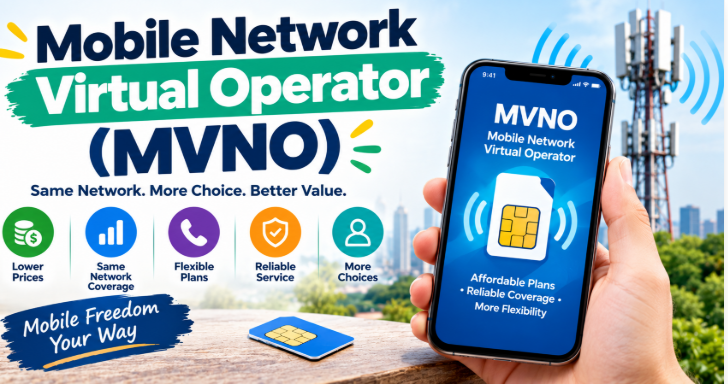
These companies are known Mobile Network Virtual Operators (MVNO): However, many consumers are surprised to learn that dozens of smaller companies offer mobile services without actually owning cellular towers or network infrastructure.
Mobile Network Virtual Operators (MVNO) have become increasingly popular because they often provide affordable plans, flexible pricing, and competitive features. In many cases, customers receive access to the same nationwide networks used by major carriers while paying significantly less.
What Is a Mobile Network Virtual Operator (MVNO)?
Instead of building and maintaining cell towers, MVNOs purchase network access from established Mobile Network Operators (MNOs) and then sell mobile services directly to consumers.
This business model allows MVNOs to offer:
- Voice calling
- Text messaging
- Mobile data
- International services
- Family plans
Without the enormous cost of operating a nationwide network.
Also Read Learn French Mobile App
How Does a Mobile Network Virtual Operator (MVNO) Work?
The Mobile Network Virtual Operator concept is relatively simple.
Major carriers invest billions of dollars in:
- Cell towers
- Network equipment
- Spectrum licenses
- Infrastructure maintenance
MVNOs lease access to those networks and resell mobile services under their own brand names.
For example, an MVNO may use:
- Verizon’s network
- AT&T’s network
- T-Mobile’s network
While offering different plans, pricing structures, and customer service experiences.
Most customers never notice a difference in daily usage because they are still connecting to the same underlying network.
Mobile Network Operator vs. MVNO
Understanding the difference helps clarify how the industry works.
Mobile Network Operator (MNO)
An MNO owns and operates network infrastructure.
Examples include:
- Verizon
- AT&T
- T-Mobile
These companies manage cell towers, radio equipment, and network technology.
Mobile Network Virtual Operator (MVNO)
An MVNO leases access from MNOs and focuses on:
- Marketing
- Customer service
- Billing
- Plan management
The MVNO does not own the physical network.
Why MVNOs Have Become Popular
Several factors have contributed to MVNO growth.
Lower Costs
Mobile Network Virtual Operator avoid massive infrastructure expenses.
Flexible Plans
Many MVNOs offer:
- No-contract plans
- Prepaid options
- Customized data packages
- Family plans
Consumers appreciate having more flexibility.
Improved Network Access
Modern MVNOs often provide access to the same nationwide coverage used by major carriers.
This makes them attractive alternatives for budget-conscious users.
Advantages of Using an MVNO
Many consumers choose MVNOs because of their benefits.
Affordable Pricing
One of the biggest advantages is cost savings.
MVNO plans frequently cost less than traditional carrier plans.
For example, a user who only needs moderate data usage may save hundreds of dollars per year.
No Long-Term Contracts
Many MVNOs operate on a month-to-month basis.
This allows customers to switch providers without cancellation penalties.
Wide Variety of Plans
Different users have different needs.
MVNOs often offer options such as
- Unlimited plans
- Low-data plans
- International calling packages
- Family plans
This variety makes it easier to find a suitable plan.
Potential Disadvantages of MVNOs
While Mobile Network Virtual Operator (MVNOs) offer many benefits, there are some limitations.
Data Prioritization
During periods of heavy network congestion, some MVNO customers may experience slower speeds.
This occurs because network owners may prioritize their own subscribers first.
Limited Retail Presence
Many MVNOs operate primarily online.
Fewer Premium Features
Some premium services offered by major carriers may not be available through every MVNO.
Examples may include:
- Exclusive promotions
- Device financing
- Premium customer support
Popular MVNO Examples
Numerous Mobile Network Virtual Operator operates around the world.
Popular examples in the United States include
Mint Mobile
Mint Mobile became well-known for offering discounted prepaid plans on T-Mobile’s network.
Visible
Visible operates using Verizon’s network and focuses on simplified unlimited plans.
Google Fi
Google Fi combines multiple network technologies and offers unique international features.
Cricket Wireless
Cricket uses AT&T’s network and offers prepaid wireless plans.
Types of MVNO Business Models
Not all Mobile Network Virtual Operator operate the same way.
Full MVNO
A full MVNO manages many of its own operational systems, including:
- Billing
- Customer management
- SIM card distribution
Service Provider MVNO
This type relies more heavily on the host network for operational functions.
Reseller MVNO
Reseller MVNOs focus primarily on marketing and sales while outsourcing many technical operations.
Who Should Consider an MVNO?
MVNOs are a good option for many types of users.
Budget-Conscious Consumers
People looking to reduce monthly expenses often benefit from MVNO pricing.
Students
Students frequently choose MVNOs because of affordable plans and flexible contracts.
Families
Family plans offered by many MVNOs can reduce overall wireless costs.
Light Data Users
Customers who use limited mobile data often find excellent value through MVNO providers.
How to Choose the Right MVNO
Several factors should be considered before switching.
Network Coverage
Verify which major carrier network the MVNO uses.
Coverage quality varies by location.
Data Allowances
Review data limits carefully.
Some plans may reduce speeds after a certain usage threshold.
Pricing
Compare total monthly costs, including taxes and fees.
Customer Support
Research customer reviews and support options.
Reliable customer service can be important if problems arise.
Device Compatibility
Ensure your current smartphone works with the Mobile Network Virtual Operator network.
Future of the MVNO Industry
The MVNO market continues expanding.
Several trends are driving growth:
- Increased competition
- Rising wireless costs
- Improved network technology
- Expansion of 5G services
- Consumer demand for flexibility
As mobile technology advances, MVNOs are expected to remain important players in the wireless industry.
Are MVNOs Safe and Reliable?
Yes.
Most MVNOs operate on established carrier networks and follow industry regulations.
For everyday activities such as
- Calling
- Messaging
- Web browsing
- Video streaming
Many users notice little difference between an MVNO and a traditional carrier.
The overall experience largely depends on the specific provider and network coverage in your area.
Conclusion
A Mobile Network Virtual Operator (MVNO) provides wireless services without owning its own cellular network infrastructure. By leasing access from major carriers, MVNOs can offer affordable mobile plans, flexible options, and access to reliable nationwide coverage.
Whether you’re looking to lower your monthly phone bill, avoid long-term contracts, or find a plan that better fits your needs, a Mobile Network Virtual Operator may be worth considering. Understanding how these providers work can help you make an informed decision and potentially save money while still enjoying quality mobile service.
Faqs
What does MVNO stand for?
Mobile Network Virtual Operator (MVNO) stands for Mobile Network Virtual Operator.
Do MVNOs own cell towers?
No. MVNOs lease network access from major wireless carriers that own and operate the infrastructure.
Are MVNO plans cheaper than major carriers?
In many cases, yes. MVNOs often offer lower-priced plans because they avoid infrastructure costs.
Do MVNOs have good coverage?
Coverage depends on the host carrier’s network. Many Mobile Network Virtual Operator (MVNO) provide access to nationwide networks with strong coverage.
Can I keep my phone number when switching to an MVNO?
Yes. Most MVNOs support number portability, allowing customers to transfer existing phone numbers.
Are MVNOs suitable for heavy data users?
Many MVNOs offer unlimited plans, but users should review data prioritization policies and speed limitations before choosing a provider.
1 thought on “Mobile Network Virtual Operator (MVNO): Complete Guide for Beginners”