
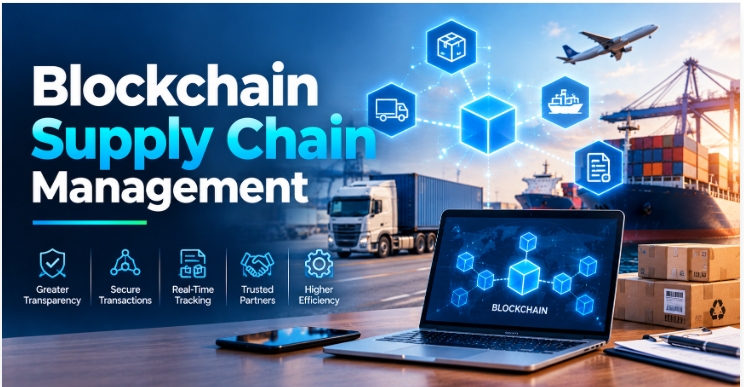
Modern Blockchain supply chain Management is more complex than ever before. Products often travel through multiple countries, warehouses, suppliers, manufacturers, distributors, and retailers before reaching customers. Managing this process efficiently requires accurate data, transparency, and trust among all participants.
This is where Blockchain Supply Chain Management is gaining attention. Blockchain technology offers a secure and transparent way to track products, record transactions, and improve collaboration across supply chain networks. Companies in industries such as retail, healthcare, food production, manufacturing, and logistics are exploring blockchain solutions to enhance visibility and reduce inefficiencies.
What Is Blockchain Supply Chain Management?
Blockchain Supply Chain Management refers to the use of blockchain technology to record, track, and verifies supply chain activities.
A blockchain is a decentralized digital ledger that stores records in a secure and tamper-resistant manner. Instead of relying on a single database controlled by one organization, blockchain distributes information across multiple participants in the network.
Every transaction or update is recorded as a block and linked to previous records, creating a transparent chain of information.
In supply chain management, blockchain can track products from raw materials to final delivery while providing a permanent record of every stage in the process.
Also Read Biomedical Equipment Technology
How Blockchain Supply Chains Management in Works
Traditional supply chains often rely on separate databases maintained by different organizations.
This can create challenges such as:
- Data inconsistencies
- Delayed updates
- Limited visibility
- Documentation errors
- Fraud risks
Blockchain Supply Chain Management creates a shared system where authorized participants can access the same verified information.
For example, when a manufacturer ships products to a distributor, the transaction can be recorded on the blockchain. As the products move through warehouses, transportation providers, and retailers, additional updates are added.
This creates a transparent history that all authorized parties can review.
Key Components of Blockchain Supply Chain Management
Distributed Ledger
The Blockchain Supply Chain Management distributed ledger stores all transaction records.
Every authorized participant has access to the same information, reducing discrepancies between systems.
Smart Contracts in Blockchain Supply Chain Management
Smart contracts are automated agreements programmed into the blockchain.
For example, a payment could automatically be released when a shipment reaches its destination.
Traceability
Blockchain Supply Chain Management improves product traceability by recording every movement and transaction throughout the supply chain.
This makes it easier to track products and identify issues quickly.
Blockchain Supply Chain Management Security
Blockchain uses cryptographic methods to protect data from unauthorized modifications.
This helps increase trust among supply chain participants.
Benefits of Blockchain Supply Chain Management
Enhanced Transparency
One of the biggest advantages of Blockchain Supply Chain Management is transparency.
Supply chain partners can view accurate information regarding product movement, ownership changes, and transaction history.
This visibility helps improve coordination across the supply chain.
Improved Traceability
Tracking products becomes much easier with Blockchain Supply Chain Management.
For example, if a food safety issue occurs, companies can quickly identify the affected batch and trace its origin.
This can reduce the scope and cost of product recalls.
Reduced Fraud to Blockchain Supply Chain Management
Blockchain records are difficult to alter after they are added.
This helps reduce fraud, counterfeit products, and unauthorized modifications to records.
Industries such as pharmaceuticals and luxury goods can particularly benefit from improved authenticity verification.
Better Efficiency
Manual paperwork and repetitive verification processes can slow down supply chains.
Blockchain Supply Chain Management can automate many tasks and reduce administrative workloads.
This often results in faster operations and fewer errors.
Stronger Security
Traditional databases may be vulnerable to cyber-attacks or unauthorized changes.
Blockchain decentralized structure makes unauthorized alterations significantly more difficult.
Increased Trust
Because information is shared and verified across the network, blockchain can strengthen trust between suppliers, manufacturers, distributors, and customers.
Real-World Applications
Food Blockchain Supply Chains Management
Food companies use Blockchain Supply Chain Management to track products from farms to grocery stores.
If contamination occurs, businesses can quickly identify affected products and remove them from circulation.
Pharmaceutical Industry
Drug manufacturers can use Blockchain Supply Chain Management to verify product authenticity and combat counterfeit medicines.
This helps protect patient safety.
Logistics and Transportation
Shipping companies can improve tracking and documentation processes through blockchain-based systems.
Real-time visibility can help reduce delays and improve operational efficiency.
Manufacturing of Blockchain and Warehouse Management
Manufacturers can track raw materials, monitor suppliers, and verify production processes using Blockchain Supply Chain Management technology.
Retail Industry
Retailers can provide customers with detailed information about product origins, sourcing practices, and supply chain journeys.
Challenges of Blockchain Supply Chain Management
High Implementation Costs
Implementing Blockchain Supply Chain Management solutions often requires significant investment.
Organizations may need new software, infrastructure, training, and integration services.
Scalability Concerns
Large supply chains generate massive amounts of data.
Some blockchain systems may face performance challenges as transaction volumes increase.
Blockchain and Warehouse Management of Integration with Existing Systems
Many companies already use enterprise resource planning (ERP) and warehouse management systems.
Integrating Blockchain Supply Chain Management with these existing technologies can be complex.
Regulatory Uncertainty
Blockchain regulations vary across countries and industries.
Organizations must ensure compliance with local laws and industry requirements.
Data Privacy Issues
While transparency is valuable, companies may not want all information visible to every participant.
Balancing transparency with confidentiality remains an important consideration.
User Adoption to Blockchain and Warehouse Management
Blockchain Supply Chain Management systems only work effectively when participants actively use them.
Encouraging adoption across suppliers, distributors, and logistics partners can be challenging.
Blockchain and Warehouse Management and Warehouse
Warehouse operations can also benefit from Blockchain Supply Chain Management technology.
Potential applications include:
- Inventory tracking
- Product authentication
- Shipment verification
- Supplier management
- Automated inventory updates
For example, when inventory arrives at a warehouse, blockchain records can automatically verify shipment details and update inventory status.
This reduces manual data entry and improves accuracy.
Future Trends in Blockchain Supply Chain Management
Integration with IoT
The Internet of Things (IoT) and blockchain are becoming increasingly connected.
Sensors can automatically collect data such as temperature, location, and humidity during transportation.
Artificial Intelligence Integration
AI can analyse blockchain data to identify patterns, forecast demand, and optimise supply chain operations.
Sustainability Tracking
Consumers increasingly care about ethical sourcing and sustainability.
Blockchain Supply Chain Management can help verify environmental claims and track sustainable practices throughout the supply chain.
Greater Industry Adoption
As technology becomes more accessible, more organizations may adopt blockchain-based solutions.
This could improve standardization and collaboration across industries.
Smart Blockchain Supply Chain in Management
Future supply chains may become highly automated through Blockchain Supply Chain Management, smart contracts, AI, and IoT technologies working together.
These systems could reduce human intervention while increasing efficiency and accuracy.
Is the Future of Blockchain Supply Chain Management?
Blockchain Supply Chain Management is not a complete replacement for existing supply chain systems, but it offers powerful tools for improving transparency, security, and traceability.
Organizations must carefully evaluate costs, integration requirements, and business needs before implementation.
For many industries, blockchain serves as a valuable complement to traditional supply chain technologies rather than a standalone solution.
As adoption increases and technology continues to mature, Blockchain Supply Chain Management could play a larger role in shaping the future of global logistics and supply chain operations.
Conclusion
By providing transparency, traceability, security, and automation, Blockchain Supply Chain Management offers solutions to many traditional supply chain challenges.
While implementation costs, scalability concerns, and integration challenges remain important considerations, the long-term potential is significant. As technologies such as AI, IoT, and smart contracts continue evolving, blockchain is likely to become an increasingly valuable tool for organizations seeking more efficient and trustworthy supply chain operations.
Businesses that understand and strategically adopt Blockchain Supply Chain Management technology may gain a competitive advantage in an increasingly connected and data-driven global marketplace.
Faqs
What is Blockchain Supply Chain Management?
Blockchain Supply Chain Management uses blockchain technology to track, verify, and manage supply chain transactions and product movements.
How does blockchain improve supply chains?
Blockchain improves transparency, traceability, security, and operational efficiency by creating a shared and tamper-resistant record of transactions.
What industries use blockchain in supply chains?
Industries including food production, healthcare, pharmaceuticals, manufacturing, logistics, and retail use Blockchain Supply Chain Management technology.
What are smart contracts in supply chain management?
Smart contracts are automated agreements that execute actions when predefined conditions are met, reducing manual processes.
What are the challenges of blockchain adoption?
Common challenges include implementation costs, scalability issues, regulatory concerns, integration complexity, and user adoption.
What is the future of blockchain in supply chains?
Future Blockchain Supply Chain Management trends include integration with AI, IoT devices, sustainability tracking, automation, and wider adoption across global industries.