
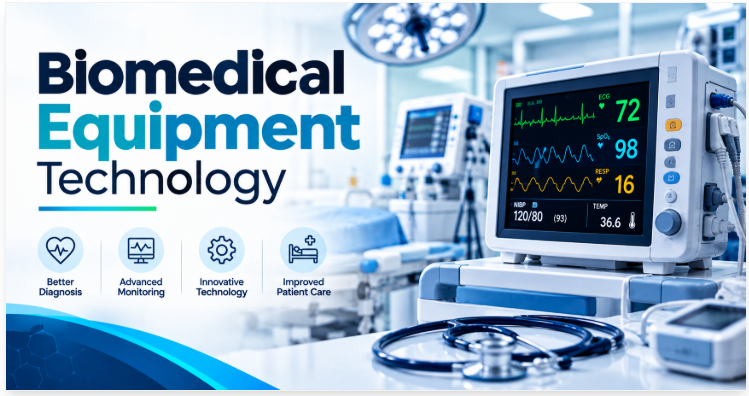
Modern healthcare depends heavily on advanced medical devices. From MRI scanners and patient monitors to infusion pumps and ventilators, hospitals rely on technology to diagnose, monitor, and treat patients. Behind these critical systems are trained professionals specializing in Biomedical Equipment Technology.
Biomedical Equipment Technology combines healthcare, engineering, electronics, and information technology. Professionals in this field ensure that medical equipment operates safely, accurately, and efficiently. As healthcare facilities continue adopting advanced technology, the demand for skilled biomedical equipment technicians and technologists continues to grow.
What Is Biomedical Equipment Technology?
Biomedical Equipment Technology is a specialized field focused on the installation, maintenance, repair, calibration, and management of medical equipment used in healthcare settings.
Biomedical equipment Technology professionals work with a wide range of devices, including:
- Patient monitors
- Defibrillators
- Ventilators
- MRI machines
- CT scanners
- Ultrasound systems
- Infusion pumps
- X-ray equipment
- Laboratory analyzers
Their primary goal is to ensure that medical devices function correctly and safely for both patients and healthcare providers.
Also Read American Technologies Inc
Why Biomedical Equipment Technology Matters
A malfunctioning monitor or incorrectly calibrated infusion pump could affect treatment decisions and patient outcomes. Biomedical equipment Technology professionals help prevents these issues through regular inspections, maintenance, and testing.
Their work contributes to:
- Patient safety
- Accurate diagnoses
- Reliable treatment delivery
- Reduced equipment downtime
- Regulatory compliance
- Cost-effective healthcare operations
Without proper Biomedical equipment Technology management, hospitals would face increased risks and operational challenges.
Key Responsibilities of Biomedical Equipment Technicians
The Biomedical Equipment Technology (BMETs) perform a variety of tasks in healthcare environments.
Biomedical Equipment Technology Installation
When hospitals purchase new equipment, BMETs help install and configure the devices.
This may involve setting up hardware, connecting networks, testing functionality, and ensuring compliance with manufacturer guidelines.
Preventive Maintenance
Technicians inspect equipment, replace worn components, update software, and verify performance according to maintenance schedules.
Troubleshooting and Repairs
When equipment malfunctions, Biomedical Equipment Technology diagnose and repair issues quickly.
Their work helps minimize disruptions to patient care and hospital operations.
Calibration and Testing
Many medical devices require precise measurements.
Biomedical Equipment Technology professionals perform calibration procedures to ensure accuracy and compliance with safety standards.
Documentation
Accurate record-keeping is an important part of the profession.
Technicians document inspections, repairs, maintenance activities, and equipment performance history.
Skills Needed in Biomedical Equipment Technology
Success in Biomedical Equipment Technology requires a combination of technical and soft skills.
Electronics Knowledge
Medical devices contain electronic circuits, sensors, and communication systems.
Understanding electronics helps technicians diagnose and repair equipment effectively.
Computer Skills
Modern medical devices often include software, operating systems, and network connectivity.
Basic IT knowledge is increasingly valuable in this field.
Problem-Solving Ability
Equipment failures can occur unexpectedly.
Biomedical Equipment Technology professionals must analyze symptoms, identify root causes, and implement solutions efficiently.
Attention to Detail
Small errors can affect equipment performance.
Careful testing and precise documentation are essential.
Communication Skills
Biomedical Equipment Technology frequently works with doctors, nurses, administrators, and equipment manufacturers.
Clear communication helps resolve technical issues quickly.
Educational Requirements
There are several pathways into biomedical equipment technology.
Associate Degree Programs
Many professionals begin with a two-year associate degree in biomedical equipment technology or a related field.
Programs typically cover:
- Electronics
- Anatomy and physiology
- Medical equipment systems
- Computer networking
- Healthcare regulations
Bachelor’s Degree
Some positions require or prefer a bachelor’s degree in biomedical engineering, electronics engineering technology, or a related discipline.
Advanced education may provide opportunities for leadership or specialized roles.
Certifications in Biomedical Equipment Technology
Biomedical Equipment Technology Professional certifications can enhance career prospects.
Common certifications demonstrate technical expertise and commitment to professional development.
Career Opportunities
Biomedical Equipment Technology offers a variety of career paths.
Biomedical Equipment Technology (BMET)
Technicians maintain and repair medical equipment in hospitals, clinics, and healthcare facilities.
Imaging Equipment Specialist
These specialists focus on advanced imaging systems such as Biomedical Equipment Technology:
- MRI scanners
- CT scanners
- X-ray systems
- Mammography equipment
Because imaging systems are highly complex, specialists often receive additional training.
Field Service Engineer
Field service engineers travel to healthcare facilities to install, maintain, and repair equipment.
They may work directly for medical device manufacturers.
Clinical Engineer
Clinical engineers manage healthcare Biomedical Equipment Technology programs and help hospitals optimize equipment performance and purchasing decisions.
Healthcare Biomedical Equipment Technology Manager
Experienced professionals may move into leadership roles overseeing equipment management departments.
Typical Work Environment
Biomedical Equipment Technology professionals work in various settings.
Common workplaces include:
- Hospitals
- Medical clinics
- Diagnostic centers
- Research laboratories
- Medical device companies
- Government healthcare facilities
The work environment often combines office responsibilities with hands-on technical tasks.
Some positions require on-call availability for emergency repairs.
Advantages of a Career in Biomedical Equipment Technology
There are several reasons why students choose this field.
Strong Demand
Healthcare technology continues to expand.
As medical facilities adopt advanced equipment, demand for qualified technicians remains steady.
Meaningful Work to Biomedical Equipment Technology
Biomedical Equipment Technology professionals contribute directly to patient care and safety.
Their work supports doctors, nurses, and healthcare teams.
Diverse Career Paths
The Biomedical Equipment Technology field offers opportunities in healthcare, engineering, manufacturing, education, and management.
Continuous Learning
Technology evolves rapidly.
Professionals regularly learn new systems and technologies, keeping the work intriguing and engaging.
Challenges in the Biomedical Equipment Technology Profession
Like any career, biomedical equipment technology has challenges.
Rapid Technological Changes
New medical devices are introduced frequently.
Technicians must continuously update their knowledge and skills.
High Responsibility
Medical equipment directly affects patient care.
Attention to detail and accuracy are essential.
Emergency Repairs
Equipment failures sometimes occur unexpectedly.
Professionals Biomedical Equipment Technology may need to respond quickly to urgent situations.
Future Trends in Biomedical Equipment Technology
The future of biomedical equipment technology looks promising.
Several trends are shaping the profession:
Connected Medical Devices
Healthcare facilities increasingly use network-connected equipment.
Technicians need stronger IT and cyber security skills.
Artificial Intelligence
AI-powered diagnostic tools are becoming more common.
Biomedical Equipment Technology professionals may support these advanced systems.
Remote Monitoring
Remote patient monitoring technologies continue expanding.
This creates new opportunities for equipment management and support.
Predictive Maintenance
Advanced analytics can identify equipment problems before failures occur.
Predictive maintenance may reduce downtime and improve reliability.
Is Biomedical Equipment Technology a Good Career?
For individuals interested in healthcare and technology, biomedical equipment technology can be an excellent career choice.
It offers:
- Competitive earning potential
- Job stability
- Opportunities for advancement
- Meaningful work
- Exposure to cutting-edge technology
The combination of technical expertise and healthcare impact makes it a unique and rewarding profession.
Conclusion
Biomedical equipment technology is a critical field that supports modern healthcare through the maintenance, repair, testing, and management of medical devices. From patient monitors and ventilators to advanced imaging systems, biomedical professionals ensure that equipment operates safely and accurately.
As healthcare technology continues evolving, skilled technicians and technologists will remain essential to hospitals, clinics, and medical organizations. For students interested in electronics, engineering, and healthcare, Biomedical Equipment Technology offers a stable, challenging, and highly rewarding career path.
Faqs
What is biomedical equipment technology?
Biomedical Equipment Technology is the field focused on maintaining, repairing, calibrating, and managing medical equipment used in healthcare facilities.
What does a biomedical equipment technician do?
A BMET installs, inspects, repairs, tests, and maintains medical devices to ensure safe and reliable operation.
What degree is needed for Biomedical Equipment Technology?
Many professionals begin with an associate degree in biomedical equipment Biomedical Equipment Technology, electronics technology, or a related field.
Is biomedical equipment technology a good career?
Yes. It offers strong job demand, career growth opportunities, and the chance to work with advanced healthcare Biomedical Equipment Technology.
Where do biomedical equipment technicians work?
They commonly work in hospitals, clinics, medical laboratories, healthcare organizations, and medical equipment companies.
What skills are important in biomedical equipment technology?
Important skills include electronics knowledge, troubleshooting, computer skills, attention to detail, communication, and problem-solving abilities.
1 thought on “Biomedical Equipment Technology: Complete Guide for Students and Professionals”