
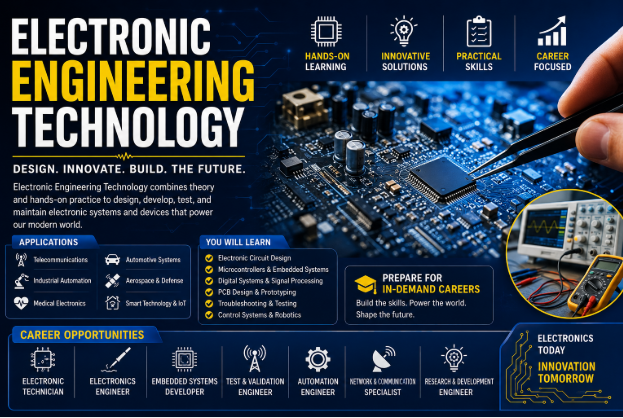
Electronic engineering technology is one of the most exciting and rapidly evolving fields in today’s technology-driven world. From smartphones and computers to medical equipment and industrial automation systems, electronic technology plays a vital role in modern life. As industries continue adopting advanced technologies, the demand for skilled electronic engineering professionals continues to grow.
Whether you’re a student considering a career path, professional exploring technical fields, or simply curious about how electronic systems work; understanding electronic engineering technology can open the door to countless opportunities.
What Is Electronic Engineering Technology?
Electronic Engineering Technology (EET) focuses on the practical application, installation, testing, maintenance, and troubleshooting of electronic systems and equipment.
Professionals in this field work with:
- Electronic circuits
- Communication systems
- Industrial controls
- Computer hardware
- Robotics
- Automation systems
- Embedded devices
Their goal is to ensure electronic systems operate efficiently, safely, and reliably.
Also Read Corvid Technologies
Why Electronic Engineering Technology Matters
Modern society depends heavily on electronic systems.
Almost every industry relies on technology to improve productivity, communication, and efficiency.
Electronic Engineering Technology supports innovations in:
- Healthcare
- Manufacturing
- Telecommunications
- Transportation
- Energy production
- Consumer electronics
For example, hospitals depend on advanced monitoring equipment, while factories use automated control systems to increase production efficiency.
Core Areas of Electronic Engineering Technology
The field covers a wide range of specialized areas.
Electronic Circuits
Electronic engineering technology circuits form the foundation of most electronic devices.
Students and professionals learn how to:
- Build circuits
- Analyze circuit behavior
- Test components
- Troubleshoot problems
Understanding circuits is essential for working with modern electronics.
Digital Electronics
Digital systems power computers, smartphones, and countless electronic devices.
Topics often include:
- Logic gates
- Microprocessors
- Digital communication
- Embedded systems
Digital electronics has become increasingly important as technology advances.
Telecommunications
Communication systems connect people and businesses worldwide.
Electronic engineering technology professionals may work with:
- Wireless networks
- Fiber-optic systems
- Satellite communications
- Mobile technologies
Reliable communication infrastructure is critical for modern society.
Industrial Automation to Electronic Engineering
Technology
Manufacturing facilities increasingly use automated systems.
Electronic engineering technology Professionals in this area work with:
- Programmable Logic Controllers (PLCs)
- Sensors
- Robotics
- Control systems
Automation improves productivity while reducing operational costs.
Essential Skills for Electronic Engineering Technology
Success in electronic engineering technology requires a combination of technical and practical skills.
Problem-Solving Skills
Electronic systems occasionally experience faults or failures.
Professionals must identify issues quickly and develop effective solutions.
Technical Knowledge
A strong understanding of electronics principles helps professionals work with complex equipment.
Attention to Detail
Small mistakes in electronic systems can cause significant problems.
Careful testing and analysis are essential.
Communication Skills
Electronic engineering technology professionals often collaborate with engineers, technicians, managers, and customers.
Clear communication improves project outcomes.
Adaptability
Technology evolves rapidly.
Professionals must continuously update their knowledge and skills.
Educational Requirements
There are several pathways into electronic engineering technology careers.
Associate Degree Programs
Students learn:
- Circuit analysis
- Electronics fundamentals
- Digital systems
- Technical troubleshooting
These programs often include laboratory experience.
Bachelor’s Degree Programs
A bachelor’s degree provides more advanced training.
Students may study:
- Control systems
- Telecommunications
- Embedded systems
- Automation technologies
Graduates often qualify for broader career opportunities.
Certifications
Electronic engineering technology Professional certifications can strengthen career prospects.
Examples include certifications in:
- Electronics
- Industrial automation
- Network systems
- Telecommunications
Certifications demonstrate specialized expertise to employers.
Career Opportunities in Electronic Engineering Technology
The field offers a wide variety of career paths.
Electronics Technician
Electronic engineering technology install, maintain, and repair electronic equipment.
They work in industries such as manufacturing, healthcare, and telecommunications.
Field Service Technician
Field service technicians travel to customer locations to troubleshoot and repair systems.
This role often involves hands-on technical work.
Electronic Engineering Technology For Automation Specialist
Automation specialists manage industrial control systems and production equipment.
Many manufacturing facilities rely on these professionals.
Telecommunications Technician
Telecommunications technicians support communication networks and infrastructure.
Their work helps ensure reliable connectivity.
Engineering Technologist
Electronic engineering technology assist engineers with testing, implementation, and system optimization.
They bridge the gap between theory and practical application.
Industries That Hire Electronic Engineering Technology Professionals
Electronic engineering technology graduates can find opportunities across numerous industries.
Manufacturing
Factories rely heavily on electronic control systems and automation.
Electronic Engineering Technology Healthcare
Medical equipment requires skilled technicians for maintenance and support.
Telecommunications
Communication networks need professionals who understand complex electronic systems.
Electronic Engineering Technology Energy
Power generation facilities use advanced monitoring and control equipment.
Aerospace
Aircraft and spacecraft depend on sophisticated electronic technologies.
The versatility of electronic engineering technology makes it valuable across many sectors.
Real-World Applications
Consider these examples:
- Smartphones use advanced microprocessors and communication systems.
- Electric vehicles depend on electronic power management systems.
- Hospitals use sophisticated diagnostic equipment.
Behind each of these technologies are professionals who design, maintain, and support electronic systems.
Advantages of a Career in Electronic Engineering Technology
Many people choose this field because of its benefits.
Strong Job Demand
Electronic engineering technology continues expanding across industries.
This creates ongoing demand for skilled professionals.
Diverse Career Options
Graduates can work in many different sectors.
Hands-On Work
Individuals who enjoy practical problem-solving often find the field rewarding.
Opportunities for Electronic Engineering Technology
Growth
Electronic engineering technology careers frequently offer advancement opportunities.
Continuous learning can lead to higher-level positions.
Future Trends in Electronic Engineering Technology
The future of electronic engineering technology looks promising.
Several emerging trends are shaping the industry.
Artificial Intelligence
AI-powered systems require advanced electronic hardware and control systems.
Internet of Things (IoT)
Connected devices continue expanding in homes, businesses, and industries.
Renewable Energy
Solar power, wind energy, and battery Electronic engineering technology rely on sophisticated electronics.
Electronic Engineering TechnologyRobotics
Automation and robotics are becoming increasingly important in manufacturing and logistics.
These innovations will continue creating new opportunities for electronic engineering technology professionals.
Challenges in the Industry
Like any profession, electronic engineering technology has challenges.
These include:
- Rapid technological change
- Continuous training requirements
- Complex troubleshooting tasks
- High-performance expectations
However, many professionals find these challenges intellectually rewarding.
Conclusion
Electronic engineering technology is a dynamic and rewarding field that combines technical knowledge with practical problem-solving skills. From industrial automation and telecommunications to healthcare and renewable energy, electronic technology plays a critical role in modern society.
As technology continues advancing, the demand for skilled electronic engineering technology professionals is expected to remain strong. Whether you’re considering an educational program or exploring career options, this field offers diverse opportunities, hands-on work, and long-term growth potential.
Faqs
What is Electronic Engineering Technology?
Electronic Engineering Technology focuses on the practical application, testing, maintenance, and troubleshooting of electronic systems and equipment.
Is Electronic Engineering Technology a good career?
Yes. The Electronic engineering technology field offers strong job demand, diverse career opportunities, and growth potential across many industries.
What skills are needed for electronic engineering technology?
Important skills include problem-solving, technical knowledge, communication, attention to detail, and adaptability.
What industries hire Electronic Engineering Technology graduates?
Common industries include manufacturing, healthcare, telecommunications, energy, aerospace, and automation.
What is the difference between engineering and engineering technology?
Electronic engineering technology often focuses on design and theory, while engineering technology emphasizes practical implementation and application.
Is electronic engineering technology in demand?
Yes. Growing reliance on electronics, automation, and digital systems continues to drive demand for qualified professionals.