
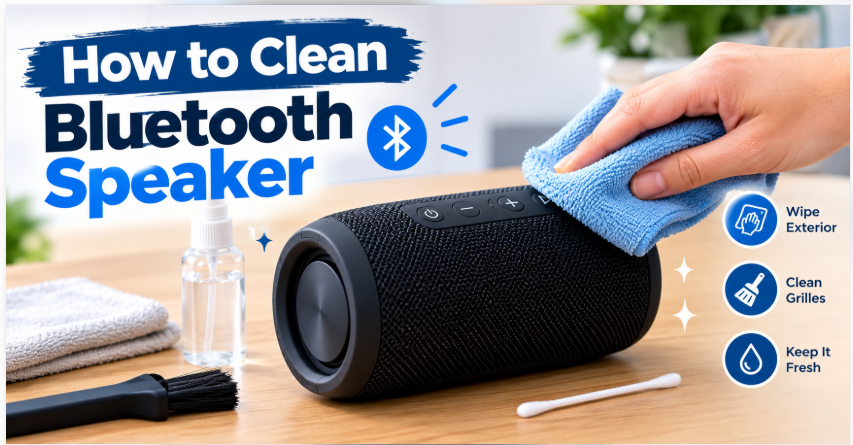
Quick answer: How to clean Bluetooth speaker safely: switch it off first, then wipe it with a dry microfiber cloth. For grime, use a cloth slightly dampened with water (plus a drop of mild dish soap for stubborn spots), and clean the grille with a soft brush. Never submerge it unless it’s rated IPX7 or higher, and never use bleach, acetone, or abrasive pads. Let it air-dry fully before charging or playing it again.
This guide explains how to clean Bluetooth speaker models of every kind — fabric grille, metal grille, waterproof or not — without damaging them. Bluetooth speakers collect everything: dust on the shelf, fingerprints from daily use, sand from the beach, and kitchen grease if it lives near the stove. Left alone, that buildup doesn’t just look bad — a clogged grille can muffle sound, and grit in the charging port can stop it charging properly. The good news: cleaning a speaker takes ten minutes, costs nothing, and is hard to get wrong — as long as you know the two rules that matter: no harsh chemicals, and no water where it doesn’t belong.
Before You Start: What You Need (and What to Avoid)
You need very little:
- A dry microfiber cloth (the single most useful tool here)
- A second cloth, slightly dampened with clean water
- A soft brush — an old soft toothbrush or a small paintbrush works perfectly
- A drop of mild dish soap, only for stubborn grime
- A dry towel for the final wipe
And leave these in the cupboard: bleach, acetone or nail polish remover, alcohol-based cleaners, abrasive pads, steel wool, and anything sharp. Harsh chemicals strip coatings, cloud plastic, and can damage waterproof seals — and a sharp object poked into the grille can puncture the driver behind it. If your speaker is a waterproof model and you’re wondering how much water it can actually handle, our guide to waterproof Bluetooth speakers explains the ratings in plain language.
1. The Basic Clean: Dust and Fingerprints
Switch the speaker off first — cleaning a powered-on speaker risks accidental button presses and, on touch-control models, random volume jumps. Then wipe the whole body with the dry microfiber cloth, using light, straight strokes. For most speakers, this alone removes dust and fingerprints completely. For smudges that won’t shift, dampen the cloth slightly (it should feel barely wet, never dripping) and wipe again, then immediately follow with the dry cloth. Pay attention to the seams and the area around the buttons, where grime collects first.
2. How to Clean Bluetooth Speaker Grilles: Fabric vs Metal
The grille is where cleaning goes wrong most often, because fabric and metal grilles need different treatment:
Fabric grilles (the cloth-covered kind on most portable speakers): brush gently with a dry soft brush to lift dust out of the weave, always brushing in one direction. For a stain, dab — don’t rub — with a cloth barely dampened with water and a tiny drop of mild soap, then dab again with a clean damp cloth to lift the soap out. Never soak a fabric grille: trapped moisture breeds smell and can reach the driver.
Metal grilles (the perforated kind): brush the holes with a dry soft toothbrush to push dust out, then wipe with a slightly damp cloth. For dried grime stuck in the holes, a toothpick wrapped in a damp cloth corner reaches it without scratching — but press lightly, and never poke anything bare and sharp straight through a hole.
If the speaker still sounds muffled after the grille is clean, the problem is probably elsewhere — our fixes for a Bluetooth speaker that sounds too quiet cover the other causes, and our sound quality guide covers EQ and placement tweaks.
3. Sand, Beach Salt, and Sticky Grime
Outdoor speakers come home with the outdoors on them. For sand: let it dry completely first — wet sand smears, dry sand brushes off. Turn the speaker grille-down and tap it gently, then brush the grille and ports with a dry soft brush. For salt residue after a beach trip: wipe with a cloth dampened with fresh water (salt dissolves in fresh water), then dry immediately — salt left on metal parts corrodes them over time. For sticky grime (juice, sunscreen, kitchen grease): a cloth with a drop of mild dish soap in warm water, wrung out well, wiped over the spot, then a clean damp cloth to remove soap residue, then dry. Never run a speaker under a tap to rinse it unless its rating explicitly allows submersion.
4. What If It Got Wet?
First, check the rating. IPX5 or IPX6 means it handles splashes and jets, not submersion. IPX7 means it survives 30 minutes under 1 meter of water; IPX8 goes deeper. If your speaker got wetter than its rating allows — dropped in a pool, left in rain — switch it off immediately, shake out what water you can (grille down, gently), and let it air-dry for at least 24 hours in a ventilated spot. Don’t use a hair dryer on high heat: heat warps seals and drivers. Don’t charge it while it’s wet — charging a wet port can corrode it or short it. If it won’t charge after getting wet, that guide walks through the diagnosis step by step.
5. What NOT to Do: 7 Mistakes That Damage Speakers
- Submerging a non-waterproof speaker — even briefly. Water inside kills drivers and batteries.
- Using bleach, acetone, or alcohol cleaners — they strip coatings and weaken waterproof seals.
- Scrubbing with abrasive pads or steel wool — scratches that never come out.
- Poking sharp objects through grille holes — one slip punctures the driver.
- Blasting with a hair dryer on high heat — warped seals, damaged drivers.
- Charging while wet — corrosion and short-circuit risk in the port.
- Putting it in the washing machine — yes, people try this. It destroys the speaker.
How Often Should You Clean Your Bluetooth Speaker?
| How you use it | How often to clean | |
| Daily indoor use | Quick dry wipe once a week | |
| Kitchen or dusty room | Damp wipe every 2 weeks | |
| Outdoor, beach, or pool use | After every trip — sand and salt don’t wait | |
| Rarely used, on a shelf | Dry wipe once a month |
The Bottom Line on How to Clean Bluetooth Speaker Models Safely
Cleaning a Bluetooth speaker is simple once you know the limits: dry cloth first, damp cloth only when needed, soft brush for the grille, mild soap only for stubborn grime, and water only as far as the IP rating allows. Ten minutes of care keeps it looking new, sounding clear, and charging properly — and if you’re shopping for a replacement that can handle rougher treatment, our roundup of the best outdoor party speakers includes models built for exactly that.
FAQs: How to Clean Bluetooth Speaker
Can I wash my Bluetooth speaker under a tap?
Only if it’s rated IPX7 or higher. Splash-proof (IPX5/IPX6) speakers handle rain and splashes, not a tap or submersion. When in doubt, wipe — don’t rinse.
Can I use wet wipes on my speaker?
Plain water-based baby wipes are usually fine for the body, but avoid wipes with alcohol, bleach, or strong fragrances, and never use them on a fabric grille — they leave residue in the weave.
How do I clean a fabric speaker grille?
Brush it dry with a soft brush in one direction, then dab stains with a barely damp cloth and a tiny drop of mild soap. Never soak it, and let it air-dry fully before playing.
Can I use a vacuum cleaner on my speaker?
Yes, on the lowest setting with a soft brush attachment, held lightly over the grille — it lifts dust well. Don’t press hard, and don’t use a powerful bare nozzle, which can pull at fabric grilles.
Why does my speaker smell after cleaning?
Almost always trapped moisture — usually a fabric grille that was soaked instead of dabbed. Let it air-dry for 24 hours in ventilation; if the smell persists, the moisture reached inside and the speaker needs longer drying, not more cleaning.
Can I clean the charging port?
Yes, carefully: with the speaker off, use a dry wooden toothpick or a soft brush to lift lint out, and never use anything metal. If the port is wet, let it dry fully before charging.