
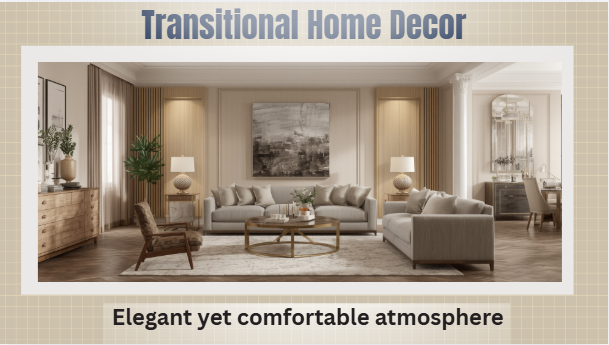
Homeowners often find themselves torn between the timeless elegance of traditional interiors and the clean simplicity of modern design. Fortunately, there is a style that beautifully combines both worlds: transitional home decor. This popular interior design approach creates spaces that feel sophisticated, comfortable, and balanced without appearing overly formal or excessively contemporary.
Transitional home decor has become one of the most sought-after design styles because of its versatility and timeless appeal. It allows homeowners to enjoy classic design elements while incorporating modern touches that keep their spaces fresh and relevant.
What Is Transitional Home Decor?
Transitional home decor is an interior design style that blends traditional and modern elements into a cohesive and balanced look. Rather than favoring one style completely, transitional design combines the warmth and elegance of traditional decor with the simplicity and clean lines of modern interiors.
The result is a space that feels
- Comfortable
- Sophisticated
- Functional
- Timeless
- Welcoming
This flexibility makes transitional design suitable for various home sizes and architectural styles.
Also read Mediterranean Home Decor
Why Transitional Home Decor Is So Popular
Many homeowners appreciate transitional home decor because it avoids the extremes of both traditional and modern styles.
Key benefits include the following:
- Timeless appearance
- Broad design flexibility
- Easy personalization
- Elegant yet comfortable atmosphere
- Compatibility with changing trends
Because transitional spaces focus on balance, they rarely feel outdated.
Key Characteristics of Transitional Home Decor
Neutral Color Palettes
Color is one of the defining features of transitional home deco interiors.
Popular colors include:
- White
- Beige
- Cream
- Gray
- Taupe
- Soft brown
Neutral colors create a calm foundation that allows furniture and decorative accents to stand out.
Clean Yet Comfortable Furniture
Furniture in transitional homes décor combines traditional comfort with modern simplicity.
Common characteristics include:
- Soft upholstery
- Straight lines
- Subtle curves
- Neutral fabrics
- Comfortable seating
Balanced Design Elements
A successful transitional room includes a thoughtful mix of traditional and contemporary pieces.
Examples include:
- Modern lighting with classic furniture
- Traditional artwork in contemporary spaces
- Sleek tables paired with upholstered chairs
Balance is essential to achieving the transitional look.
Choosing the Right Furniture
Popular options include:
Sofas and Seating
Look for pieces with:
- Neutral upholstery
- Clean silhouettes
- Comfortable cushions
Avoid overly ornate details or extremely minimalist designs.
Dining Furniture
Dining rooms often feature the following:
- Wooden tables
- Upholstered dining chairs
- Elegant yet simple finishes
These elements create a sophisticated gathering space.
Bedroom Furniture
Transitional home decor bedrooms typically include the following:
- Upholstered headboards
- Simple wood furniture
- Soft bedding
- Balanced decorative accents
The focus remains on comfort and elegance.
Transitional Living Room Ideas
The living room is often the centerpiece of a transitional home decor.
To create a balanced living room, consider:
- Neutral sofas
- Textured rugs
- Statement lighting
- Decorative pillows
- Elegant coffee tables
Layering textures helps add depth without creating visual clutter.
Use Statement Pieces Carefully
A single bold artwork, decorative mirror, or unique light fixture can become a focal point while maintaining overall harmony.
Transitional Kitchen Design
Transitional home decor kitchens are among the most popular applications of this design style.
Common features include:
- Shaker-style cabinets
- Quartz countertops
- Modern appliances
- Neutral backsplashes
- Simple hardware
These kitchens combine classic craftsmanship with modern convenience.
Focus on Functionality
A transitional kitchen should be both beautiful and practical for everyday use.
Transitional Bathroom Decor
Bathrooms can also benefit from transitional home décor design principles.
Popular features include:
- Neutral tiles
- Frameless glass showers
- Elegant vanities
- Modern fixtures
- Soft lighting
These elements create a spa-like atmosphere.
Decorative Accessories in Transitional Design
Accessories help personalize transitional spaces.
Popular decorative items include:
- Vases
- Decorative trays
- Artwork
- Table lamps
- Throw blankets
The Transitional Home Decor key is to avoid excessive decoration and maintain visual balance.
Texture Over Pattern
Transitional interiors often emphasize texture rather than bold patterns.
Examples include:
- Linen fabrics
- Wool rugs
- Velvet cushions
- Natural wood finishes
Textures add interest while preserving the room’s calm appearance.
Lighting for Transitional Homes
Lighting plays an important role in creating a polished interior.
Popular options include:
- Pendant lights
- Chandeliers
- Floor lamps
- Wall sconces
Transitional lighting often combines classic shapes with modern materials.
Benefits of Transitional Home Decor
Timeless Appeal
Transitional interiors rarely go out of style because they blend classic and contemporary influences.
Flexibility
The style works well with a wide variety of furniture and decorative choices.
Comfortable Living
Transitional home decor spaces prioritize both beauty and functionality.
Easy Updates
Small decorative changes can refresh the look without requiring a complete redesign.
Common Mistakes to Avoid
Mixing Too Many Styles
Balance is important. Combining too many unrelated styles can create confusion.
Over decorating
Transitional home decor interiors benefit from simplicity and restraint.
Using Excessive Color
Neutral palettes are central to achieving the transitional aesthetic.
Budget-Friendly Transitional Decorating Tips
Creating a transitional home decor doesn’t require a massive budget.
Affordable strategies include:
- Repainting walls in neutral colors
- Updating lighting fixtures
- Adding textured textiles
- Reusing existing furniture
- Investing in versatile statement pieces
Small updates can significantly improve the overall design.
Modern Trends in Transitional Home Decor
As interior design evolves, transitional home decor continues adapting.
Current trends include:
- Sustainable materials
- Organic textures
- Natural wood tones
- Smart home integration
- Minimalist accessories
These additions help keep transitional spaces current while preserving their timeless appeal.
Why Transitional Home Decor Works for Every Home
One reason transitional home decor design remains so popular is its adaptability. Whether decorating a small apartment, suburban house, luxury residence, or condominium, transitional principles can create spaces that feel elegant, comfortable, and personalized.
The style allows homeowners to combine beloved traditional pieces with modern updates, resulting in interiors that feel both familiar and fresh.
Conclusion
Transitional Home Decor offers homeowners the best of both design worlds. By combining classic elegance with contemporary simplicity, transitional interiors create spaces that are stylish, functional, and timeless.
Through neutral color palettes, balanced furniture choices, comfortable textures, and thoughtful accessories, homeowners can design rooms that feel welcoming and sophisticated. Whether you’re renovating an entire house or refreshing a single room, transitional home decor provides a versatile and enduring solution.
FAQs
What is transitional home decor?
Transitional home decor is a design style that combines traditional elegance with modern simplicity to create balanced and timeless interiors.
What colors are commonly used in transitional design?
Neutral colors such as white, beige, gray, cream, and taupe are most commonly used.
Is transitional decor modern or traditional?
Transitional Home Decor is a blend of both styles, combining classic and contemporary elements.
What furniture works best in transitional interiors?
Comfortable furniture with clean lines, neutral fabrics, and subtle detailing works best.
Can transitional design work in small spaces?
Yes. Its clean layouts and neutral colors often make smaller spaces feel larger and more open.
How do I add personality to a transitional room?
Use artwork, decorative accessories, textured fabrics, and statement lighting.
Is transitional home decor expensive?
Not necessarily. You can achieve many transitional home decor design elements through affordable updates and thoughtful furniture selection.
Why is transitional home decor so popular?
Its flexibility, timeless appeal, comfort, and ability to blend traditional and modern influences make it a favorite among homeowners and designers alike.